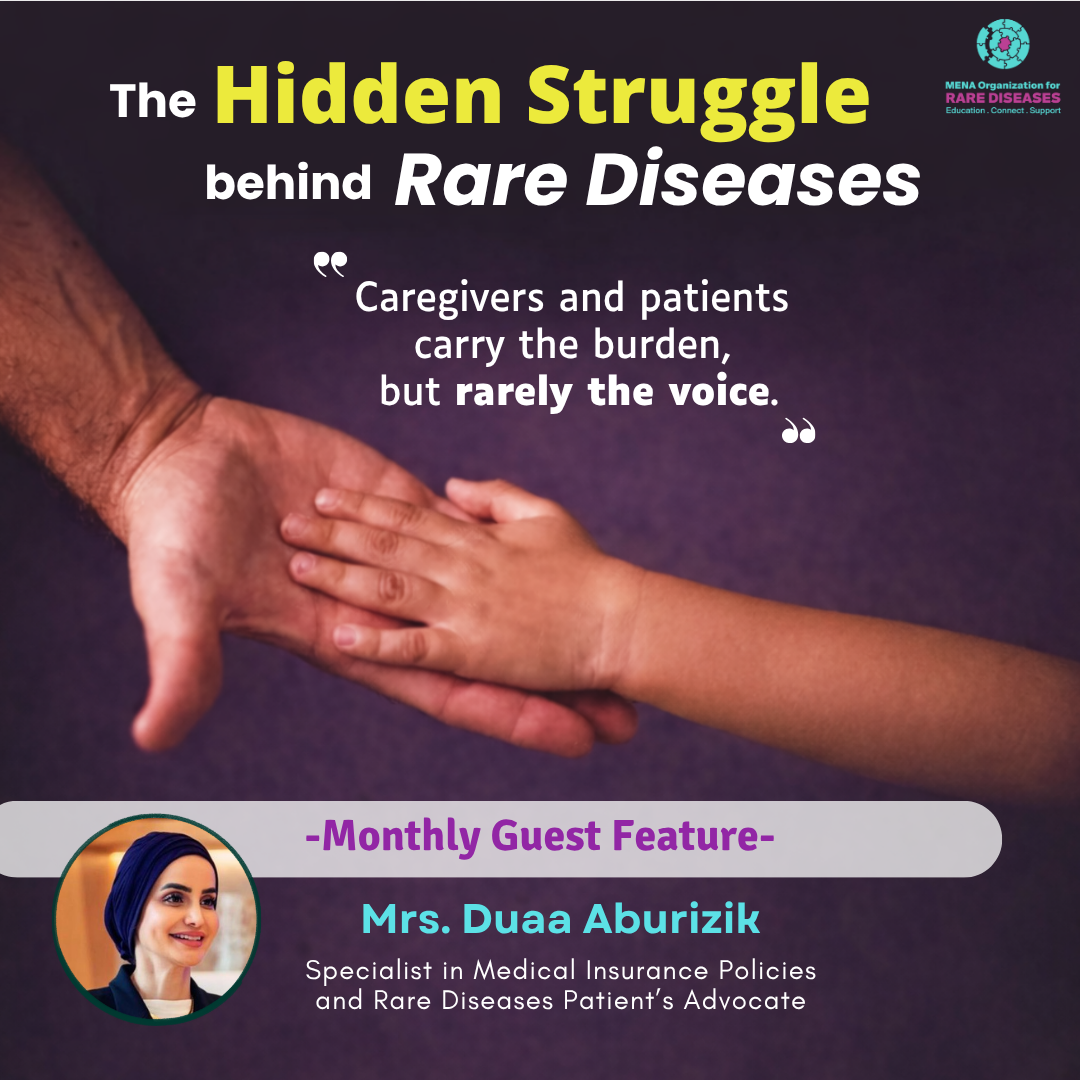
Guest of the Month: A Conversation with Mrs. Duaa Aburizik
Q: How would you describe the current state of rare disease care in the MENA region?
Mrs. Duaa: Rare disease care is often approached as a single intervention, when in reality it is a lifelong journey. Across the region, fragmented reimbursement systems, limited patient registries, and cost-driven decision-making create significant barriers for families trying to access essential therapies and services.
Q: What are some of the biggest gaps in current healthcare systems?
One of the main challenges is that healthcare systems are largely designed for acute care, not chronic, lifelong conditions. Rare diseases do not end at diagnosis, yet coverage is often short-term. This leads to major gaps in areas like rehabilitation, mental health support, and developmental care.
Q: How are patients and caregivers represented in decision-making today?
Patients and caregivers carry the daily burden of these conditions, yet their voices are still not consistently included in policy and reimbursement decisions. This is a critical gap, as their lived experiences are essential to understanding real-world outcomes and needs.
Q: What does meaningful progress look like?
Progress begins when rare diseases are recognized as a national priority. This includes implementing centralized funding mechanisms, enabling early access programs, and fostering public-private partnerships. These steps can significantly improve access and continuity of care.
Q: How should we think about the cost of orphan drugs?
While often labeled as “high-cost,” these treatments represent more than a price point—they are opportunities for improved quality of life. Innovative approaches such as risk-sharing agreements and outcomes-based reimbursement models show that access and sustainability can go hand in hand.
Q: What is the key message you would like stakeholders to take away?
Rare disease care is not a luxury—it is a lifeline. When healthcare systems are designed around long-term outcomes and grounded in patient realities, they offer more than treatment. They provide dignity, inclusion, and hope.
Final Reflection:
This discussion reinforces a clear message: improving rare disease access is not only a clinical or economic challenge—it is a systemic one. Listening to patients, aligning policies with lifelong needs, and embracing innovative funding models are essential steps toward building more equitable healthcare systems.